
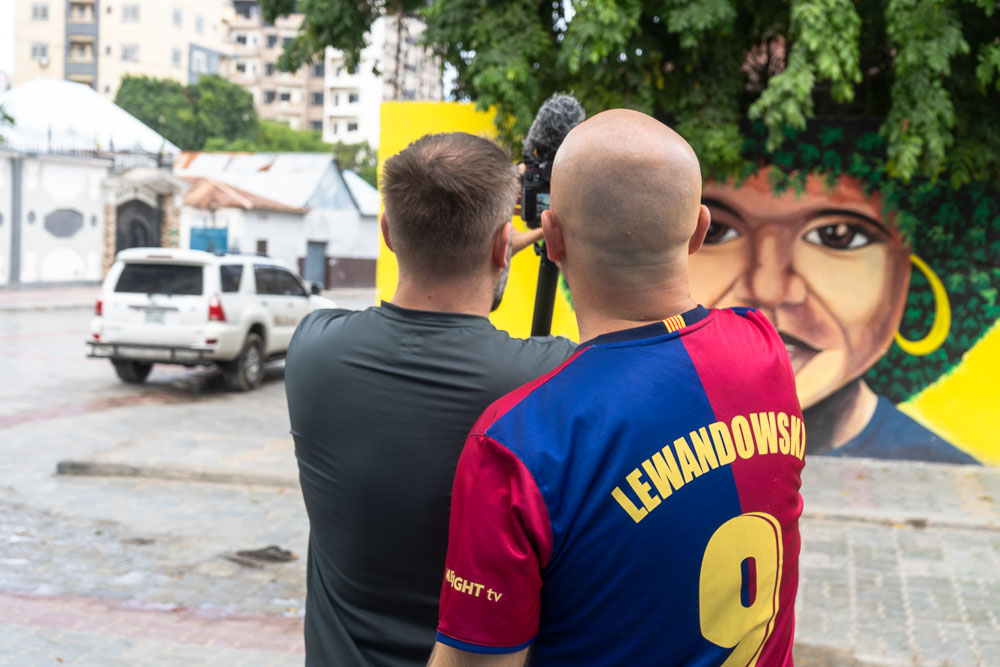
When the Polish travel YouTubers behind the channel Bez Planu (“Without a Plan”) decided to visit Mogadishu, they arrived with the expectations most travellers carry: headlines about conflict, clickbait titles, and decades of negative news. Four days later, they left telling their large Polish audience something very different. “We like Somalia very much,” they said on camera. “The people are extremely friendly and we feel really safe here.”
That transformation from apprehension to affection did not happen by accident. It happened because brothers Bartek and Tomek travelled with DS Travel, and we would like to tell you how we made their journey possible — and how we can make yours possible too.
Why You Cannot Simply Fly to Somalia — and Why That Is a Good Thing
Somalia does not yet work like a typical tourist destination. To enter the country, you need an invitation from a registered local company that takes responsibility for you during your stay. This requirement exists to protect you: the authorities want every visitor accounted for, looked after, and kept out of harm’s way.
This is exactly the role DS Travel played for Bartek and Tomek. As our team explained in their very first episode, we receive guests from abroad, arrange everything they need on arrival, and take them around Mogadishu and beyond. Before the brothers had even settled into their hotel, we had organised:
- Airport pickup and a secure hotel near the airport, in the safest district of Mogadishu, with gated entry and professional security.
- Local SIM cards with unlimited internet — about $5.50 per person for seven days of unlimited data.
- Mobile money accounts, because Somalia runs on digital payments. From cafés to tuk-tuk rides, almost everything is paid by phone. The vloggers were amazed that within hours they could pay for meals with a QR code, just like locals do.
- A licensed guide and a registered security team, travelling in a second vehicle, with all the government paperwork needed to pass checkpoints smoothly.
The brothers noticed something important about this system. The many checkpoints across Mogadishu are not there to frustrate you; they are the visible sign of a city that takes security seriously. As Tomek put it on camera: “I feel safer because of it — I can see how thoroughly everyone is checked at every step.” Vehicles are inspected, documents are verified, and because our guides carry proper accreditation, our guests pass through with minimal delay.
What They Experienced: Four Days in and around Mogadishu
| Experience | What it involved |
| Evening walk on day one | A first taste of Mogadishu’s lively night-time street economy by local tuk-tuk |
| Lido Beach | Mogadishu’s beloved beach, by night and by day, plus a traditional boat trip on the Indian Ocean |
| Bakara Market | Somalia’s largest market, once a conflict zone, today a thriving commercial hub |
| Black Hawk Down crash site | The 1993 helicopter crash site made famous by Ridley Scott’s film |
| Fish market and old port | Fresh catch, grilled fish, and the historic waterfront once called the White Pearl of the Indian Ocean |
| Artists’ studios | Painters, photographers, filmmakers, and a famous satirical video creator |
| Juba Tower | A private tour of one of Mogadishu’s newest high-rises, with rooftop views over the whole city |
| Darussalam | A modern suburb built largely by returning diaspora, with a popular amusement park and small zoo |
| Ali Jimale Mosque | The largest mosque in Mogadishu, built in 2022 and inspired by Ottoman architecture — a symbol of Somalia’s renewal |
| Airport safe zone (Medina) | The most protected district in the country, home to embassies and, reportedly, the best pizza in Mogadishu |
Along the way they ate camel shawarma (a full set with fries and a drink for $4), tried a traditional Somali breakfast of canjeero pancake with suqaar meat for under a dollar, drank ginger-milk coffee served by Sabrina — Somalia’s most popular barista, with over a million likes on TikTok — and bought Somali national football kits for $6. We list these prices because we believe in transparency: Somalia can be a very affordable destination, and you deserve to know real numbers, not vague promises.
The Culture They Fell in Love With
What struck the vloggers most was not any single sight. It was Somali culture itself.
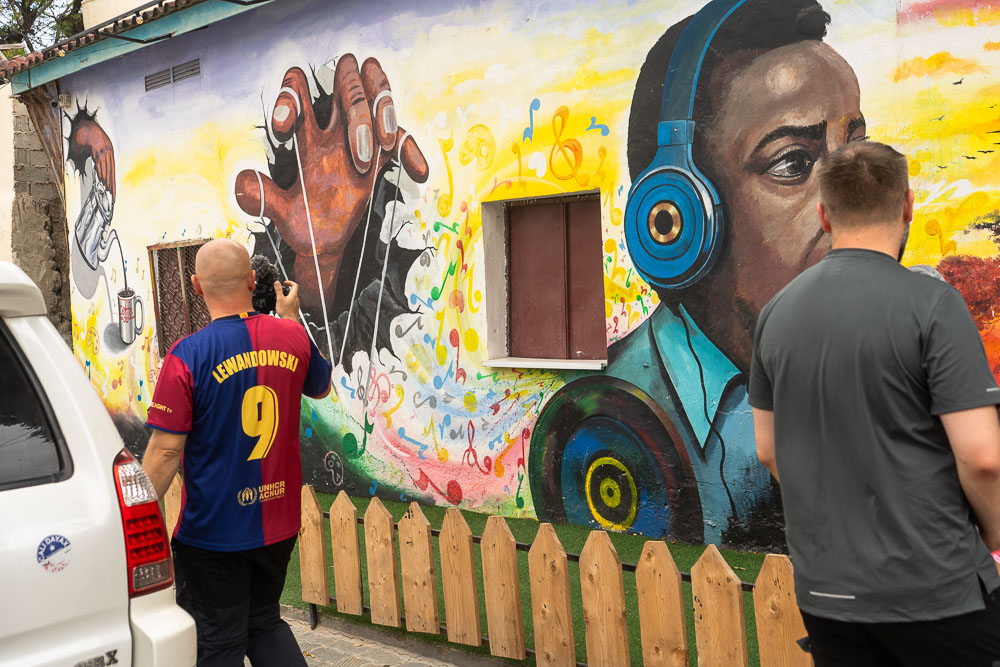
They marvelled at the hand-painted murals that decorate shopfronts across Mogadishu — a living art form that outlasts printed signs in the sun and communicates with everyone regardless of literacy. We took them to meet the artists behind those murals, including a master painter and his students, and young women working as photographers and makeup artists who document weddings and traditional dances.
They learned how Somali society organises itself through family and clan networks that function as a genuine social safety net — supporting members through illness, hardship, and disputes. Bartek reflected that, unlike the individualism he knew from Europe, “here you are never alone.”
They also discovered something that surprises almost every visitor: the remarkable honesty of everyday life. Bartek repeatedly left camera equipment unattended, even handing an expensive lens to someone he had just met, and told his viewers he felt completely at ease doing so. Theft is rare and socially unacceptable, and the community holds itself to that standard. Most of all, they met people. Students celebrating their high-school graduation who invited them into their photos. An engineer who told them, “We live normal lives here in Somalia. We work, we have dreams — no pirates.” A young man who learned about Poland through the Witcher novels. Members of the diaspora who have returned home to invest and rebuild. Again and again, Somalis approached the brothers with one request: show the world how Somalia really is.
Honest About the Challenges
We will not pretend Somalia is an ordinary destination, and neither did the vloggers. Security structures remain a visible part of daily life, some areas outside the capital are off-limits, and travel requires patience at checkpoints. That is precisely why the invitation system, licensed guides, and security escorts exist — and why the brothers, who have filmed in Haiti, Nigeria, and South Sudan, concluded that Mogadishu was far from the most dangerous place they had visited. With the right local partner, they experienced Somalia as it deserves to be experienced: safely, respectfully, and with open eyes.
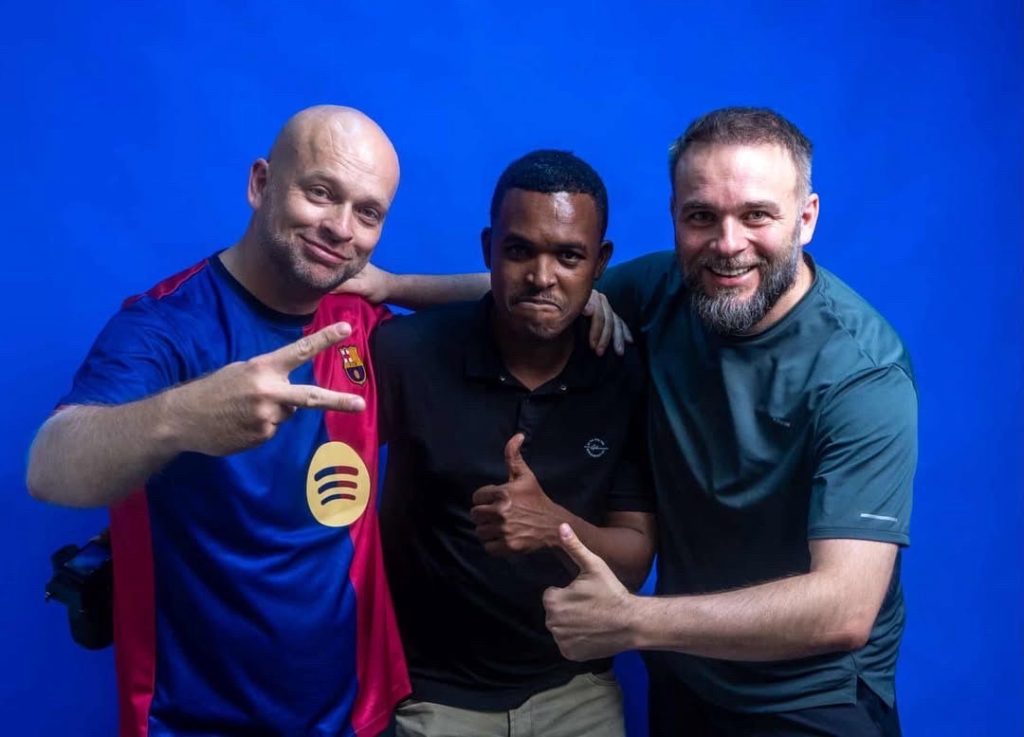
Their verdict on our guide says it best. “I recommend Mohamed with a sincere heart,” Bartek told his audience. “If any of you want to travel to Somalia, he is truly outstanding.”
Ready to Discover Somalia for Yourself?
Whether you are an international traveller, a member of the Somali diaspora returning home, or a local looking to see your own country with fresh eyes, DS Travel handles everything the Bez Planu team needed and more: your invitation and entry arrangements, secure accommodation, SIM and mobile money setup, licensed guides, security coordination, and an itinerary built around what you want to see.
Somalia is opening up, and those who visit now are seeing a country rebuilding itself with energy and pride — just as two Polish vloggers showed their viewers across four episodes.
Contact us at info@dstravel.so to start planning your journey. We will take care of the rest — from your invitation letter to your first cup of Somali ginger coffee.


